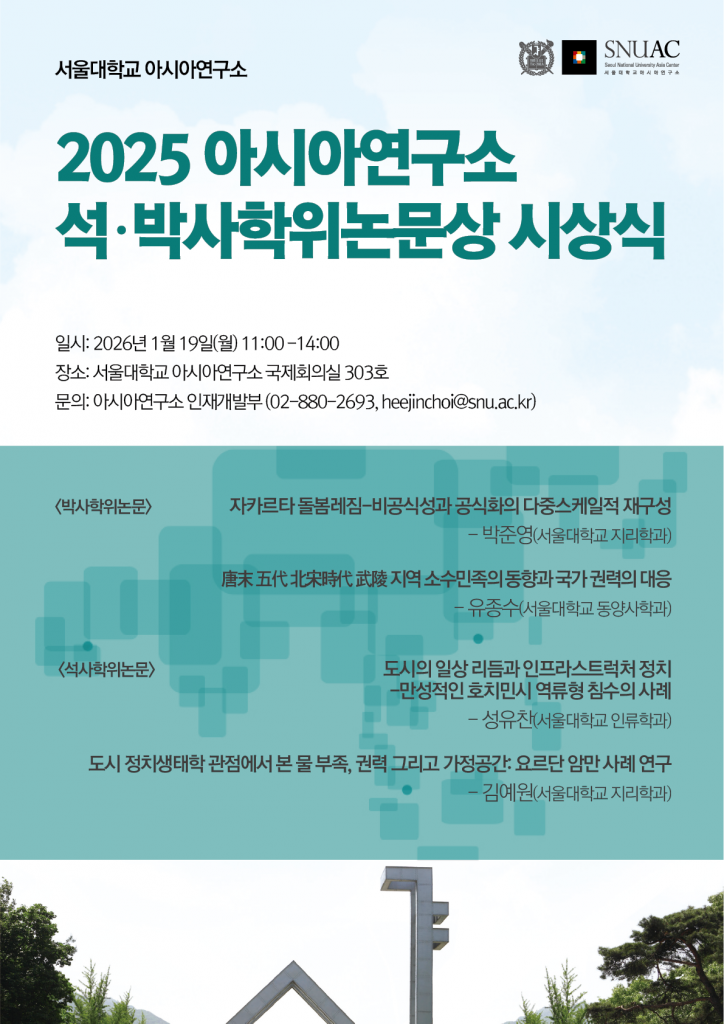
2025 SNUAC Dissertation Award Ceremony
- Date: January 19th, Monday, 2026 11:00 – 14:00
- Location: Room 303, SNUAC (Bldg. 101)
<DOCTORAL DISSERTATIONS>
- Jongsoo Yoo (Dept. of Asian History, SNU): Dynamics of Ethnic Minorities in the Wuling Areas and the Responses of State Power during the Late Tang, Five Dynasties, and Northern Song Periods
- Junyoung Park (Dept. of Geography, SNU): The Care Regime in Jakarta, Indonesia – Multi-scalar Reconfiguration of Informality and Formalization
<MASTER’S DISSERTATIONS>
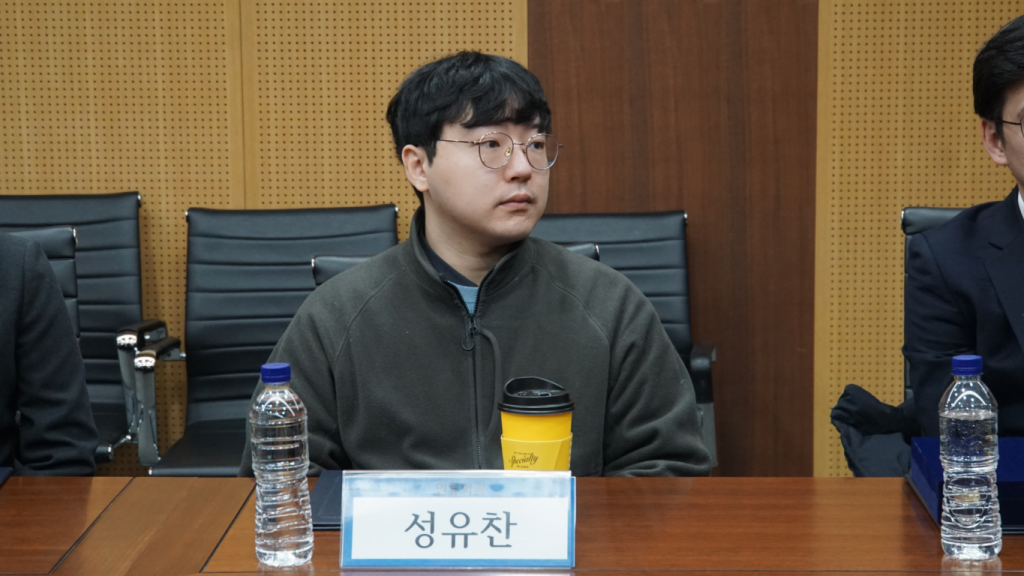
- Yuchan Seong (Dept. of Anthropology, SNU): Urban Rhythms and the Politics of Infrastructure: Chronic Backflow Flooding in Ho Chi Minh City
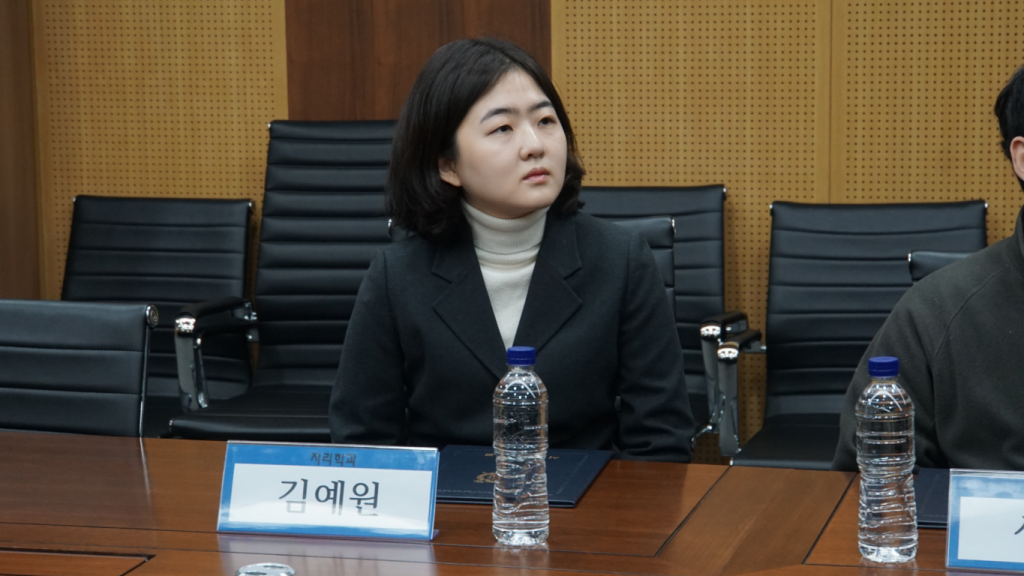
- Yewon Kim (Dept. of Geography, SNU): Water Scarcity, Power and Home Space from an Urban Political Ecology Perspective: A Case Study of Amman, Jordan
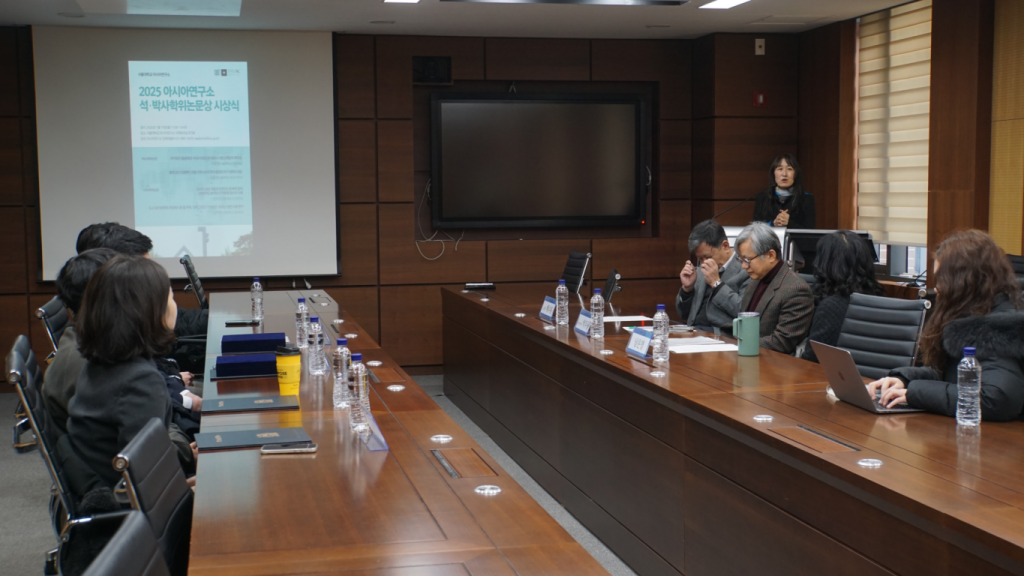
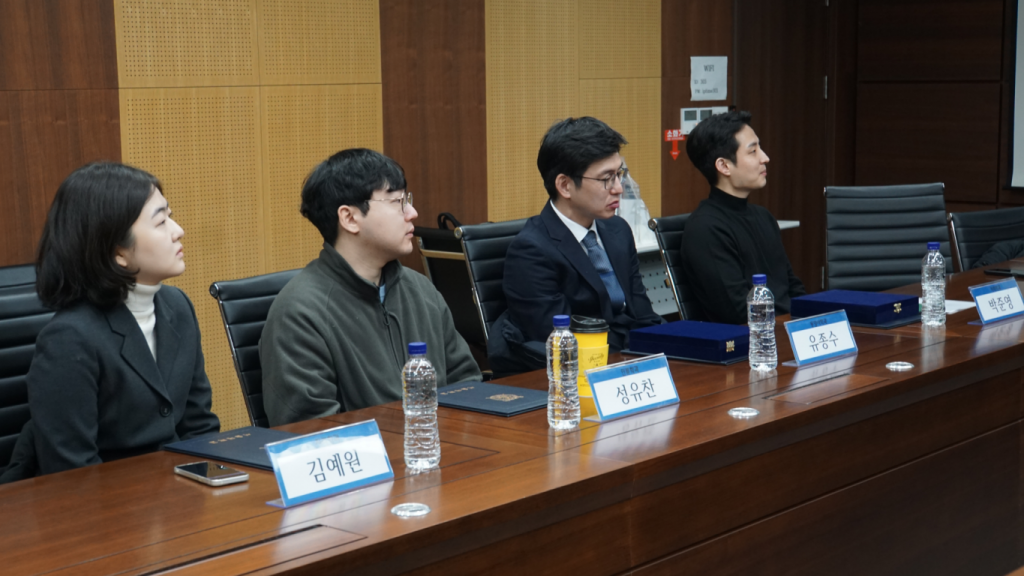
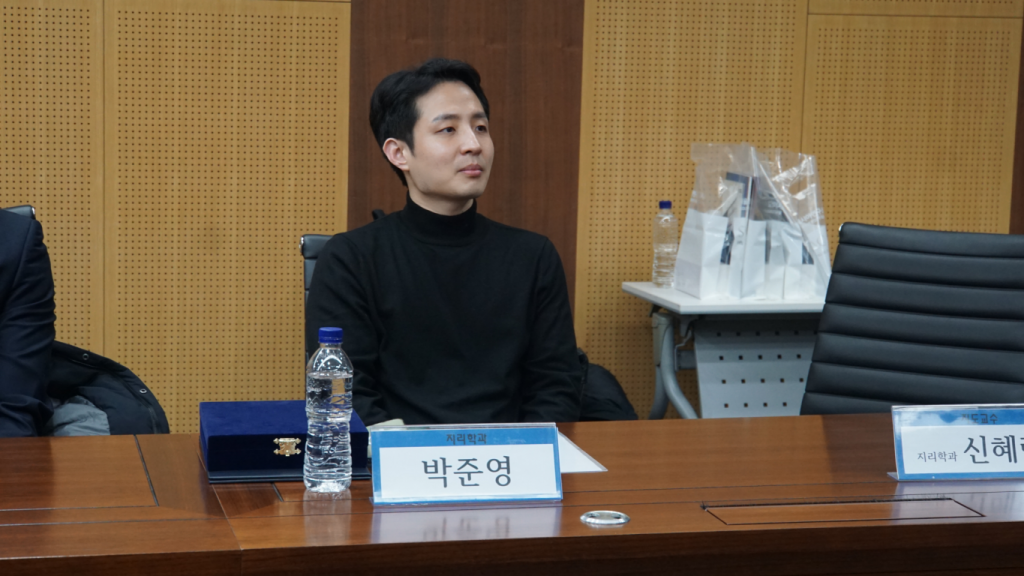
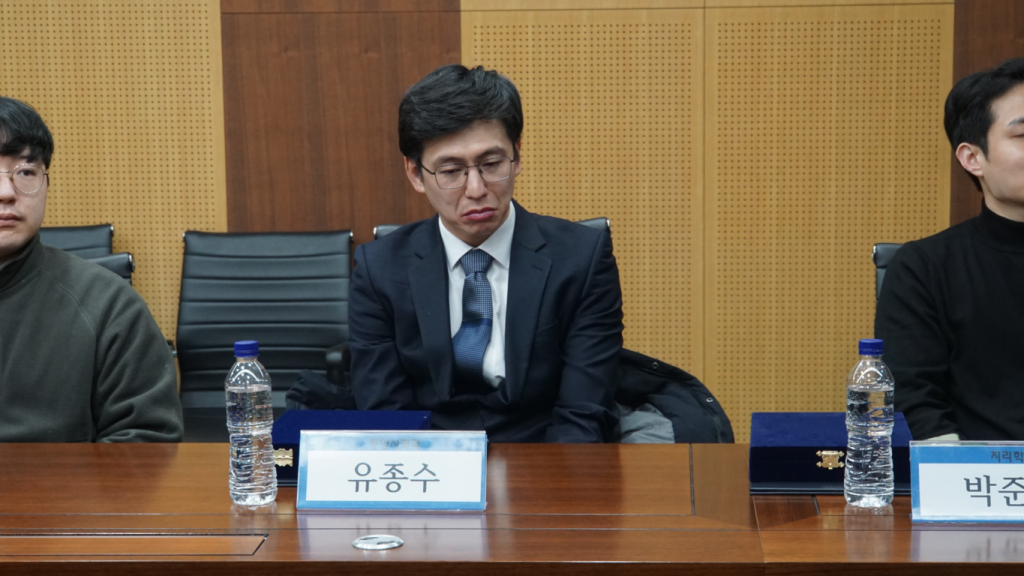
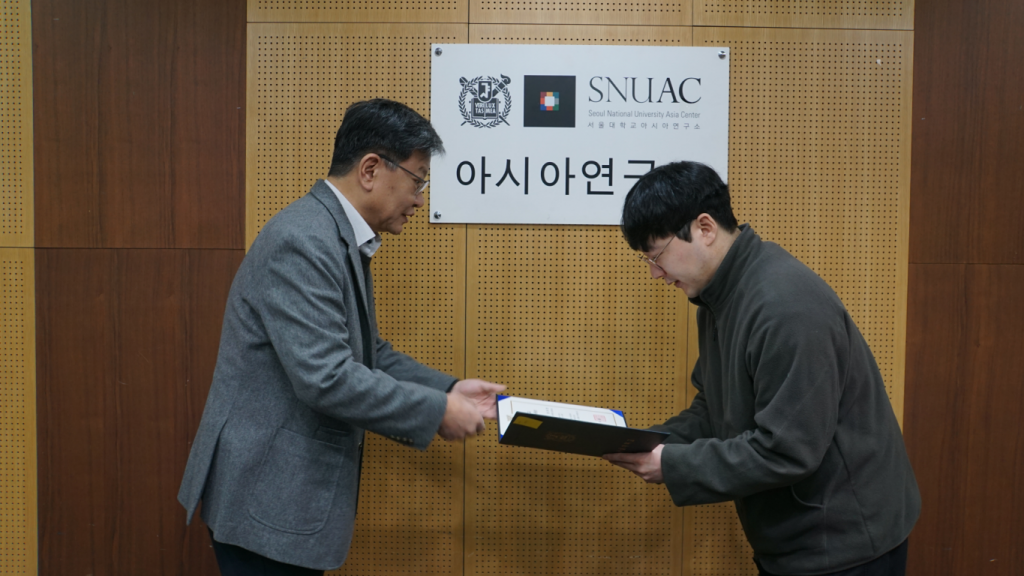
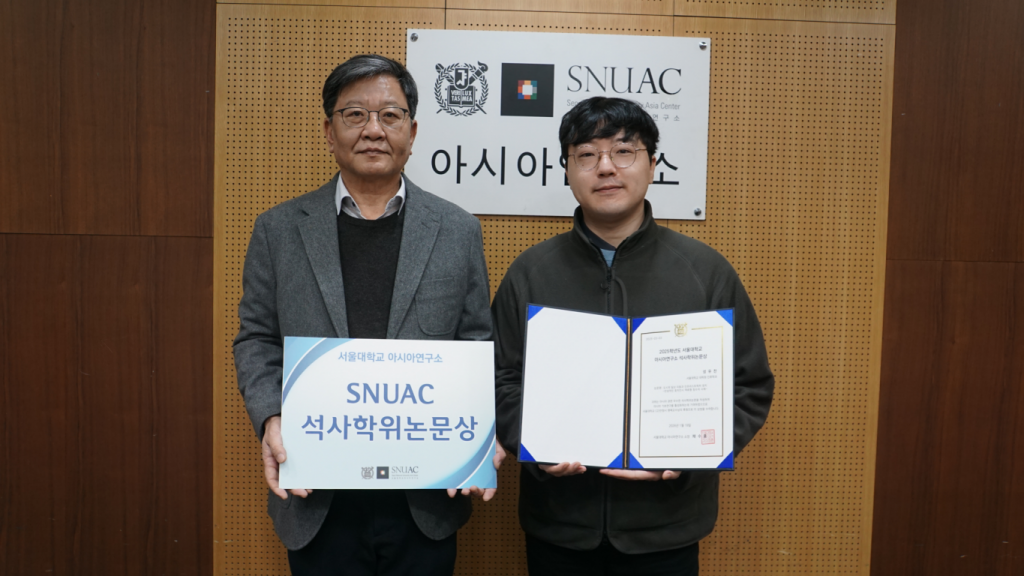
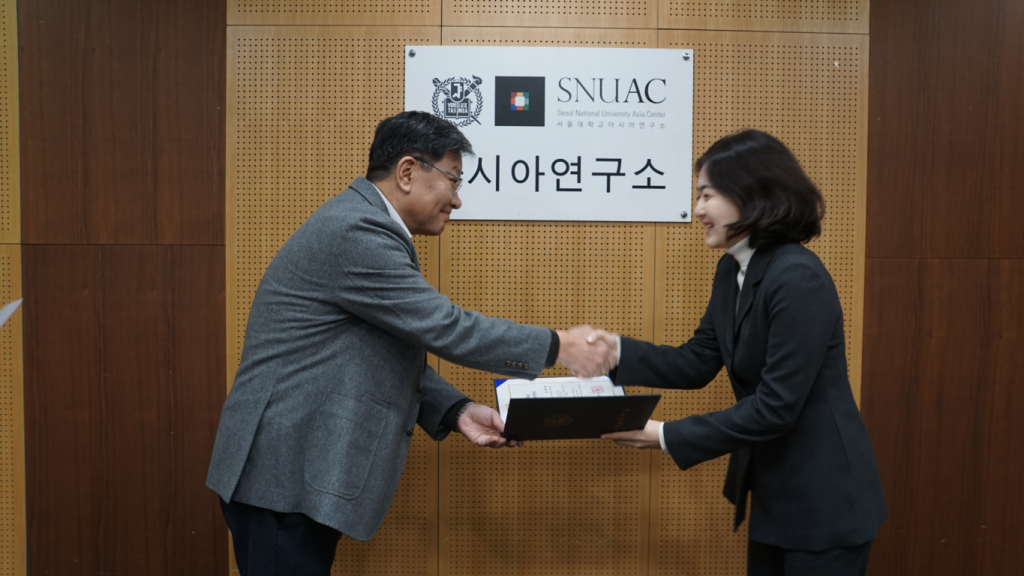
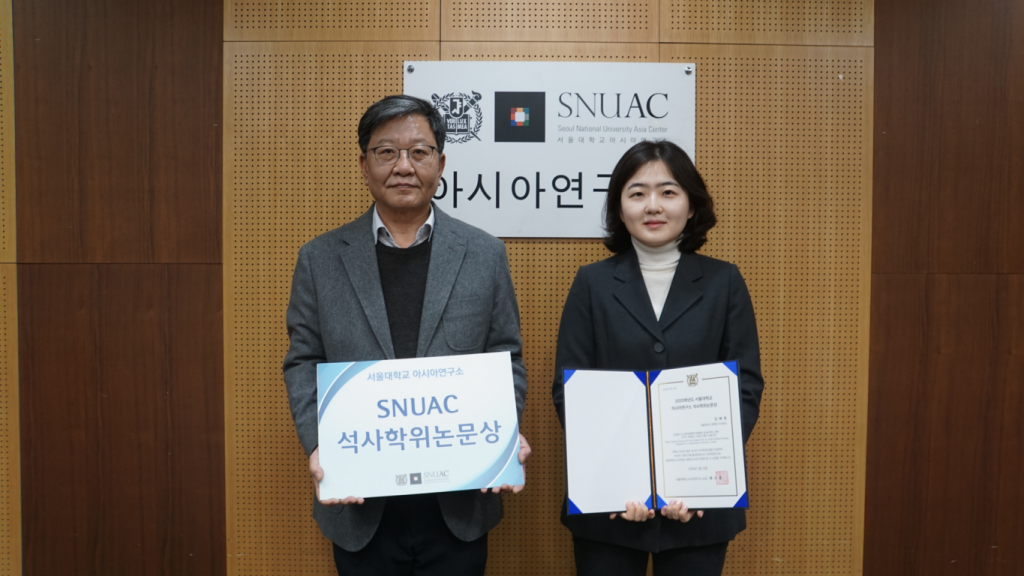
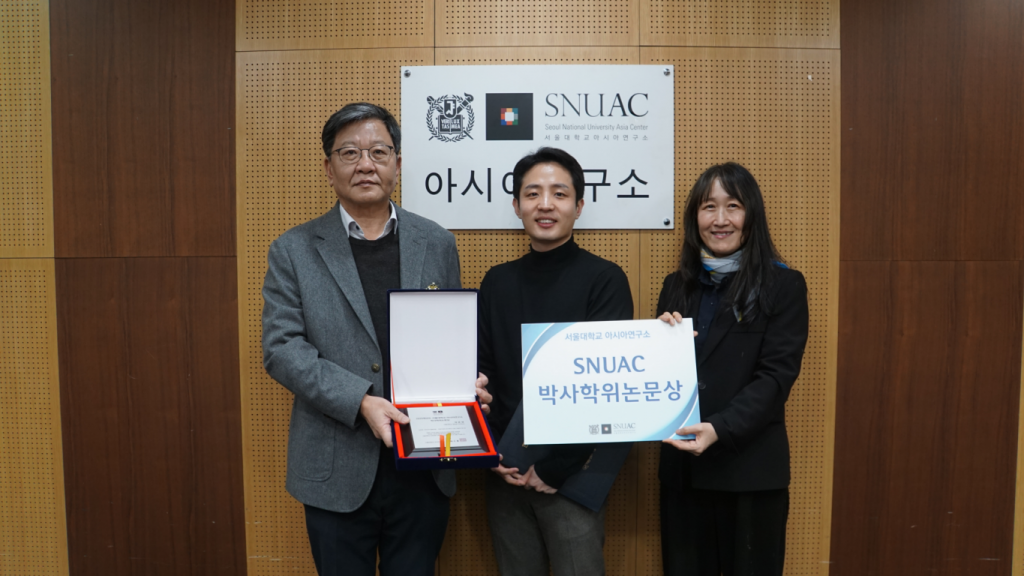
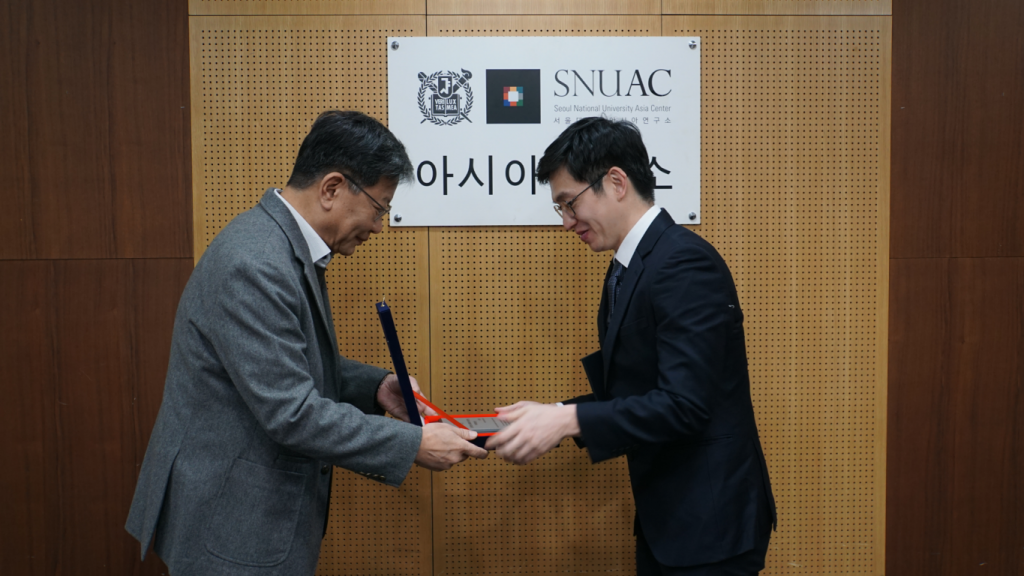
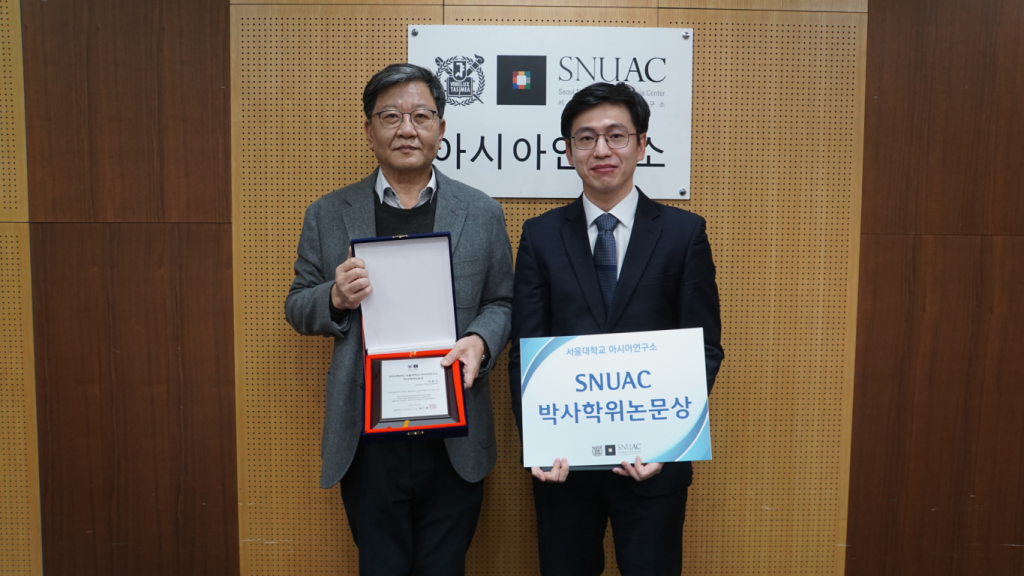
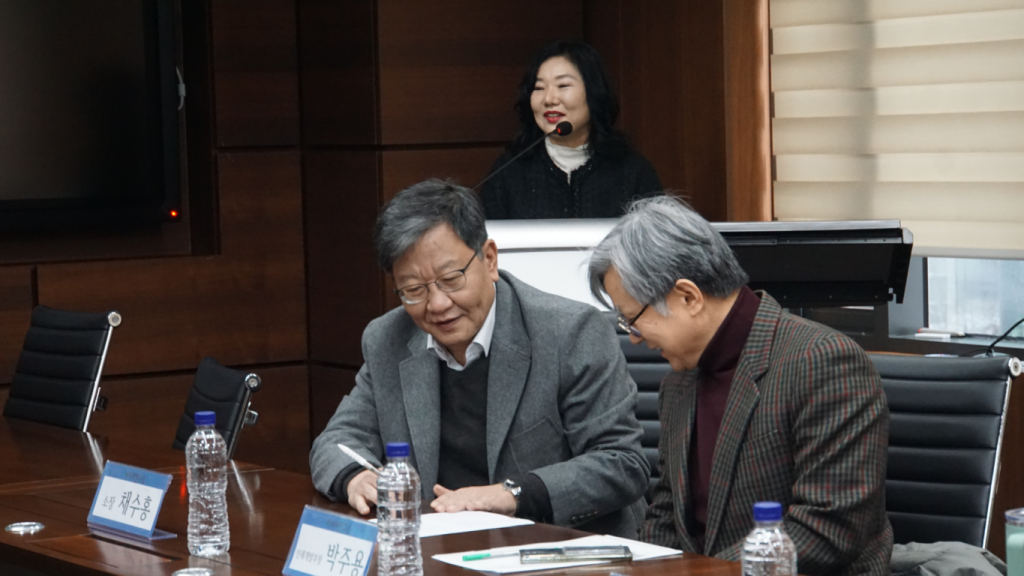
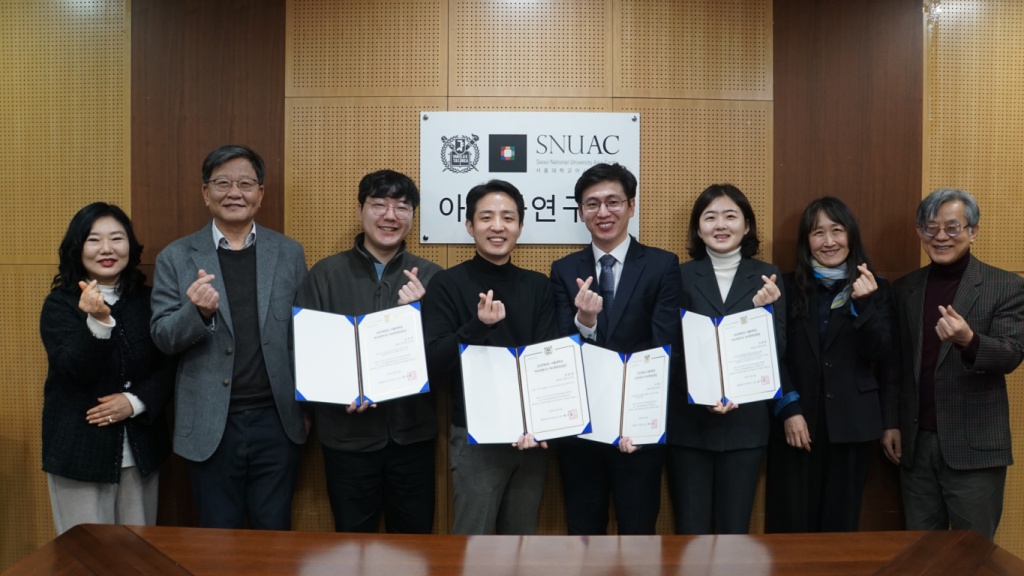
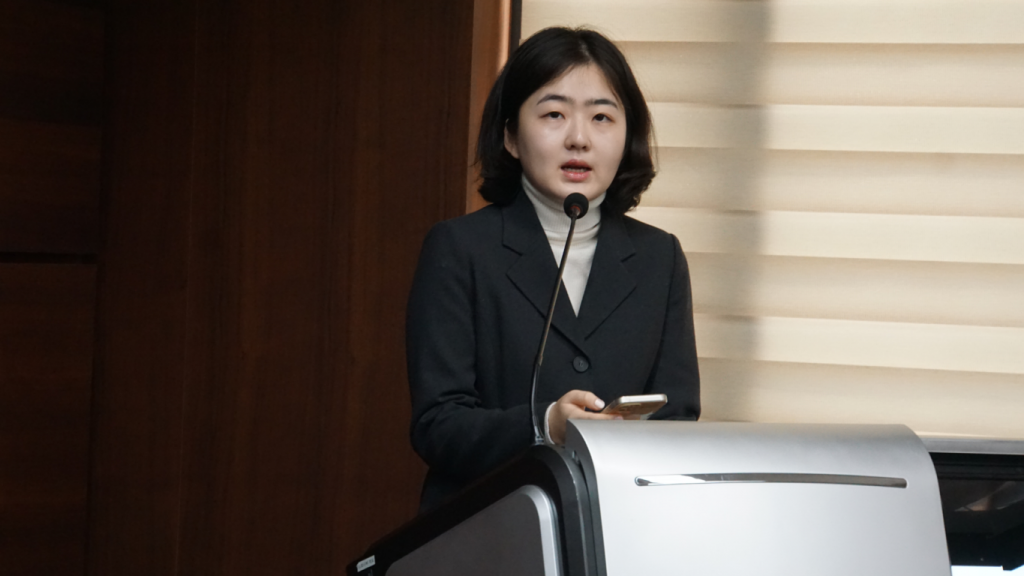
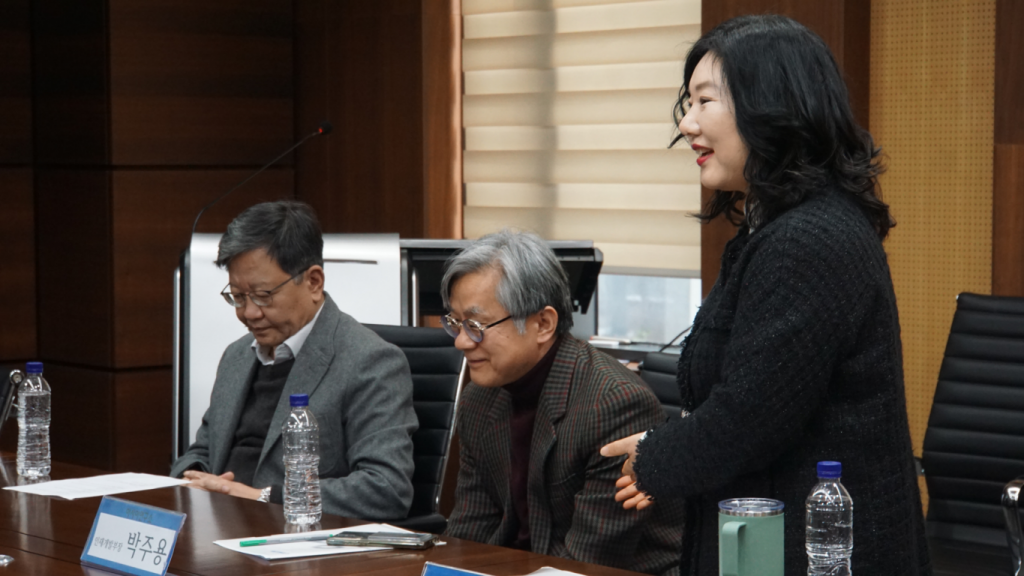
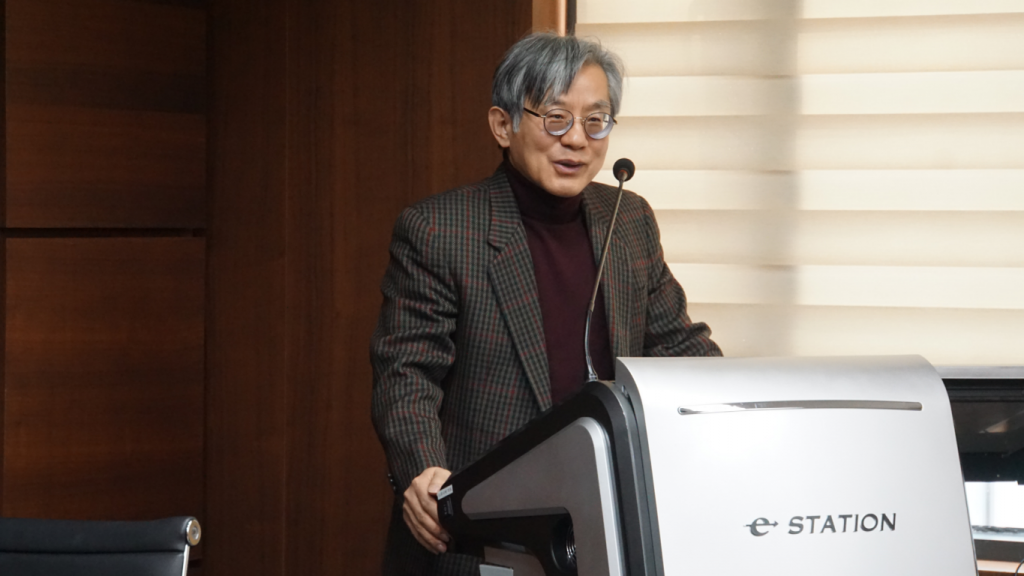
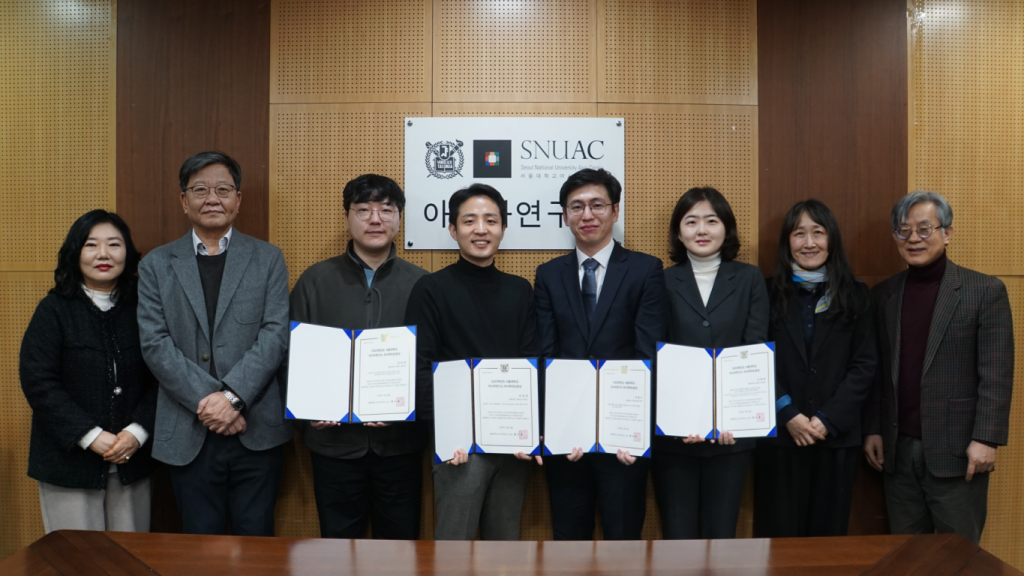
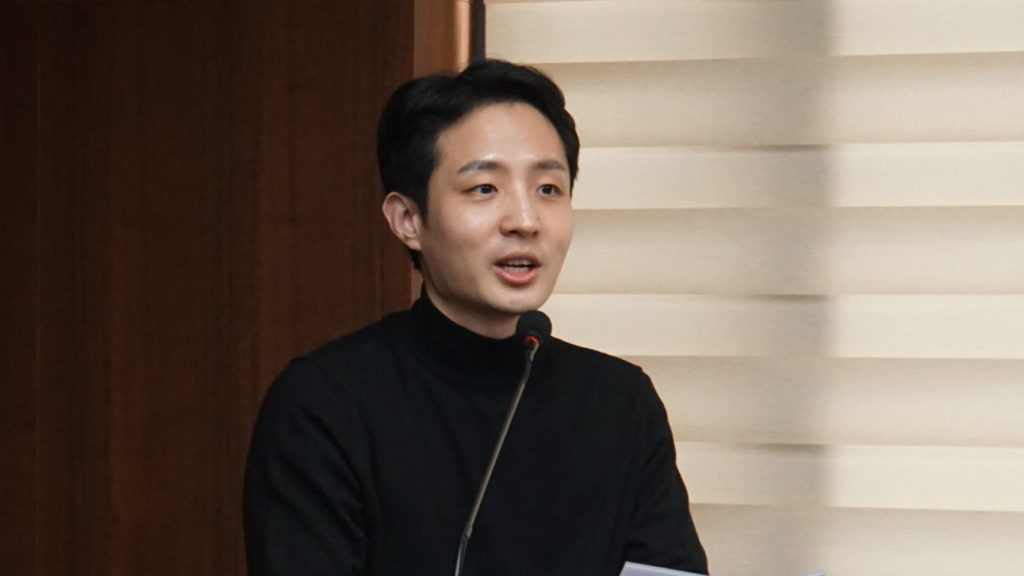
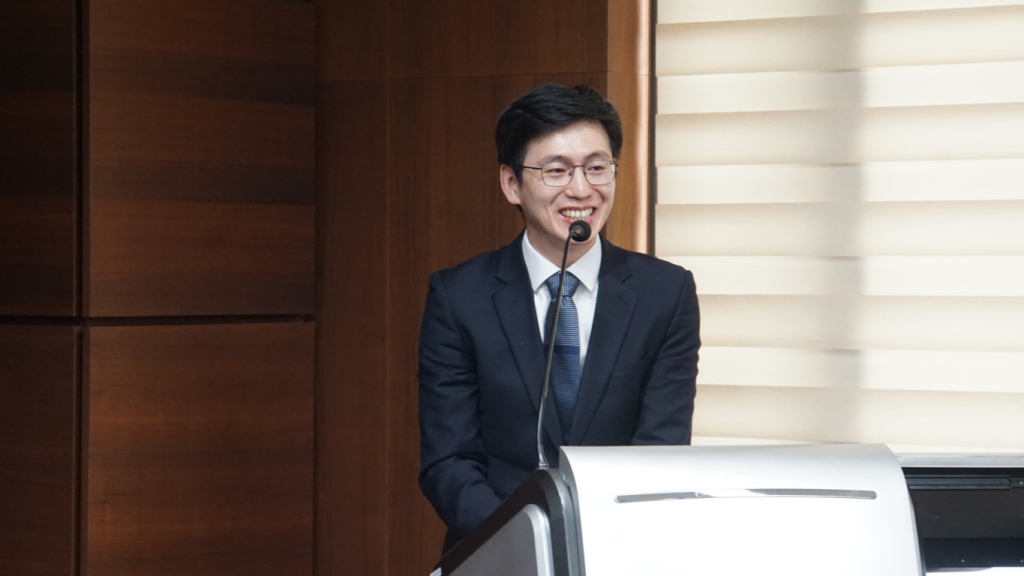
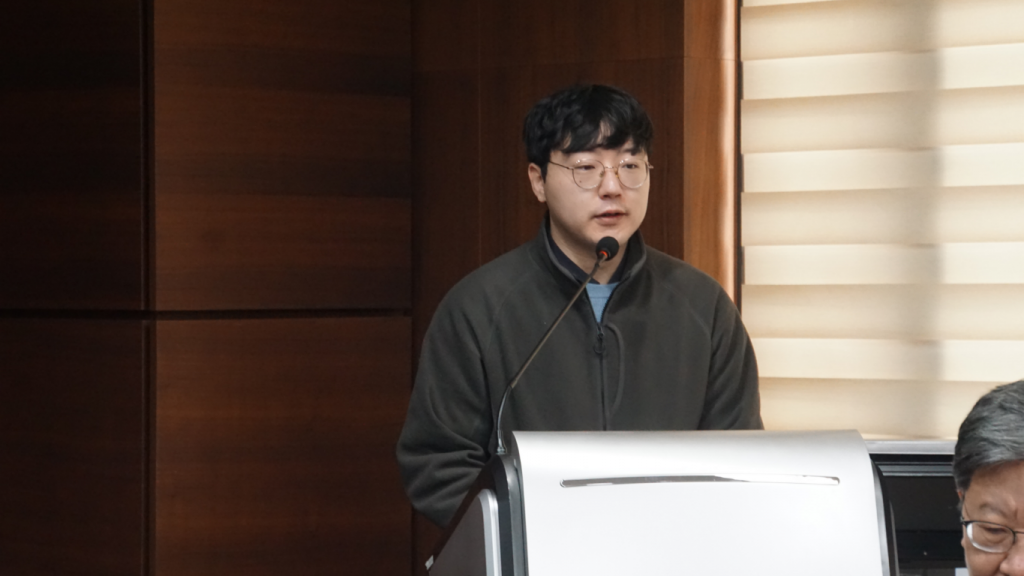
On January 19, 2026, SNUAC held the 2025 SNUAC Dissertation Award Ceremony. This year’s awards recognized two doctoral dissertations and two master’s theses. The competition was highly competitive across both categories, with the final awardees selected through unanimous evaluation by the review committee. To ensure fairness, the review was conducted blind, and the evaluation focused on research capability and the substantive contribution of each thesis.
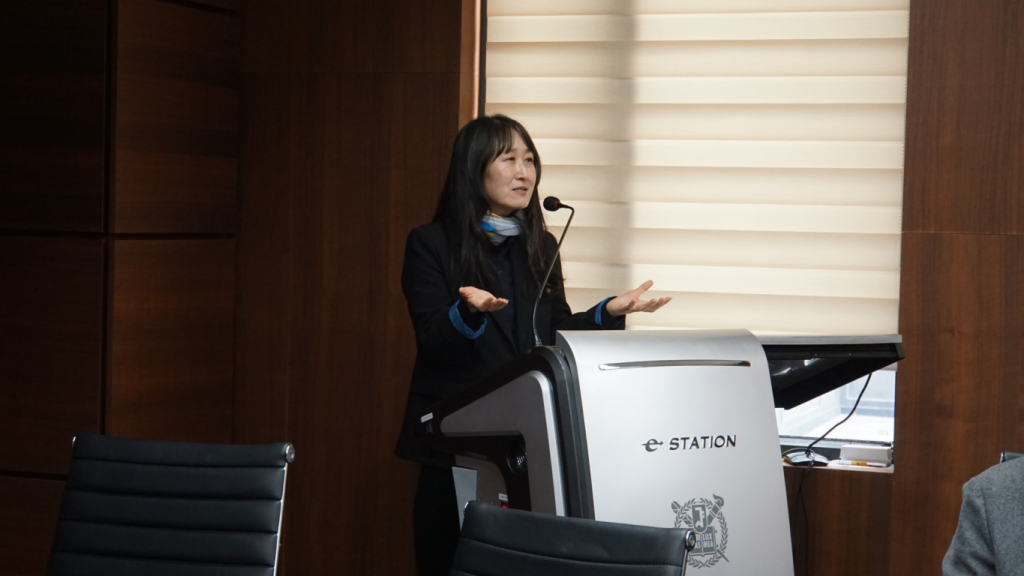
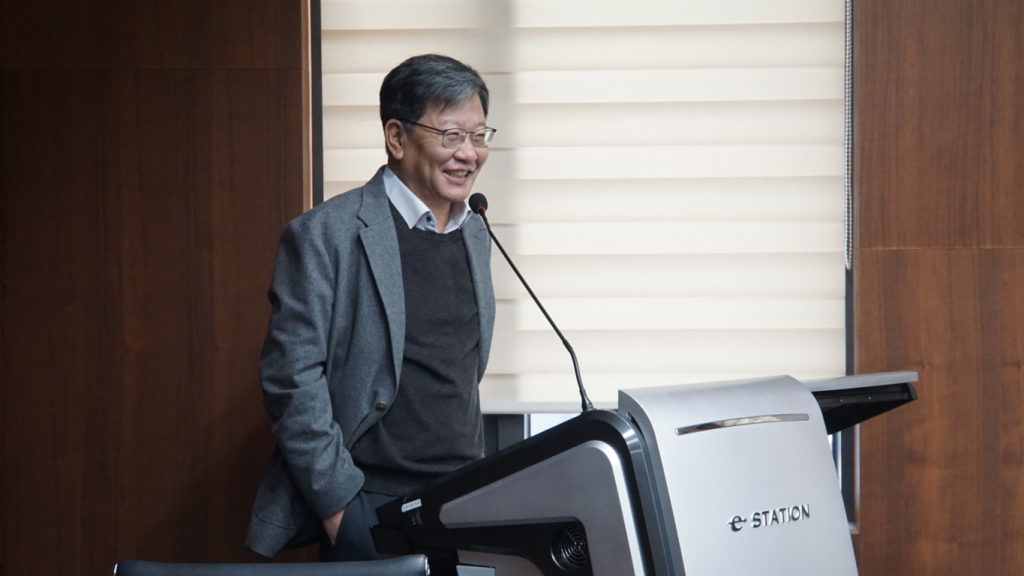
The ceremony opened with congratulatory remarks from Prof. Suhong Chae, Director of SNUAC. Prof. Chae described the thesis awards ceremony as “the most gratifying event for SNUAC,” emphasizing the significance of witnessing the accumulated achievements of emerging scholars. He noted in particular the strength of SNUAC-affiliated theses in both thematic rigor and methodological grounding, and highlighted that each winning thesis was highly regarded for its distinct line of inquiry and compelling analytical approach. He also underscored that diverse fields such as anthropology, geography, and East Asian history continue to generate empirically grounded research at SNUAC, expressing hope that such capacity would continue to drive the advancement of Asian studies.
In remarks delivered on behalf of advisors, Prof. Haeran Shin, doctoral advisor to Junyoung Park, stressed that the awardees were no longer merely “the next generation,” but already peers contributing scholarly achievements in their own right. Noting that universities and research environments are undergoing rapid transformation amid the emergence of AI, she raised questions such as “What is research?”, “How should teaching evolve?”, and “How should relationships with graduate students be reconfigured?” She also shared reflections on what researchers must hold onto amid such change, emphasizing the enduring value of fieldwork and the process of probing deeply—grounded in sufficiently accumulated data—as the pathway for researchers to maintain integrity and produce substantive work.
In his concluding remarks, Prof. Suhong Chae reiterated that good scholarship ultimately begins with the researcher’s own diligence and self-scrutiny. He emphasized the importance of maintaining academic integrity and consistency, and of developing one’s work by responding to criticism rather than avoiding it. Framing the present moment as a period in which the Western-centered order of modern academic knowledge is undergoing profound change, Prof. Chae encouraged the awardees to imagine future scholarly pathways that are not confined to already-established routes but that extend into more multilayered research landscapes.
Following the opening remarks, the awardees presented their reflections.
Doctoral Thesis Award recipient Junyoung Park introduced his dissertation analyzing wage contracting, care work, and informalization structures in Jakarta, Indonesia. He described the project as a long-standing topic pursued with both difficulty and attachment, and expressed gratitude to his advisor Prof. Haeran Shin, whose mentorship—marked by guidance, encouragement, and treating him as a researcher rather than merely a student—was instrumental to his scholarly growth. Park also noted that his time as an SNUAC research intern, scholarship recipient, and participant in research programs had shaped his trajectory, adding that the phrase “SNUAC scholar” remains for him a source of pride tied to responsibility as a researcher. He concluded by thanking interlocutors who granted interviews and participated in observation, as well as local research assistants who supported interpretation, contextual understanding, and mapping, stating his commitment to ensuring that the research contributes to broader conversations around its core problematics.
The second Doctoral Thesis Award recipient, Jongsoo Yoo (Department of Asian History), presented research tracing changes in the relationship between ethnic minority groups and state authority in the Wuling region during the transition from the Tang to the Song dynasty. Yoo highlighted two core features: first, an effort to position ethnic minority groups as grammatical subjects within historical narration, countering the limitations of surviving sources dominated by central and Han perspectives; and second, an analytical focus on “internal boundaries”—heterogeneous groups located within state borders—rather than solely on external frontiers. Yoo shared that the dissertation process involved moments of doubt regarding his own capabilities, and expressed gratitude that the award represented a form of recognition.
Master’s Thesis Award recipient Yuchan Seong presented research examining how chronic urban flooding—an “everyday disaster”—shapes life and urbanity in Ho Chi Minh City. Seong explained that the thesis sought to capture how deviant modes of urbanity become integrated into the city’s everyday life. He pledged to continue working to narrow the gap between theory and fieldwork, and expressed appreciation to Prof. Suhong Chae, the anonymous reviewers, and SNUAC staff for their support throughout the research process.
The second Master’s Thesis Award recipient, Yewon Kim, introduced her research addressing issues of water scarcity and power from an urban ecological perspective. Kim noted that SNUAC’s support was decisive for the completion of the thesis, particularly through funding that enabled fieldwork in Jordan. She thanked her advisor and reviewers, friends and teachers who facilitated fieldwork locally, peers with whom she shared insights, and her family. She concluded by expressing a desire to carry forward her work as a researcher of Asia with confidence paired with humility.
The ceremony concluded with remarks by Prof. Juyong Park, Director of Human Resources Development at SNUAC, who noted that the recognition of excellent scholarship is not only a personal achievement but also a celebration for the academic community. He emphasized that the meaning of research deepens as it is read, circulated, and contributes to society. The gathering provided time for participants to acknowledge one another’s efforts and celebrate scholarly growth after a demanding period of writing and review.
Rather than serving merely as an occasion to honor outstanding theses, this year’s ceremony affirmed the density of research produced through fieldwork and theory, the value of academic integrity, and the process through which young scholars grow into peers. The awardees are expected to continue their scholarly paths with distinct problematics and a strong sense of responsibility.