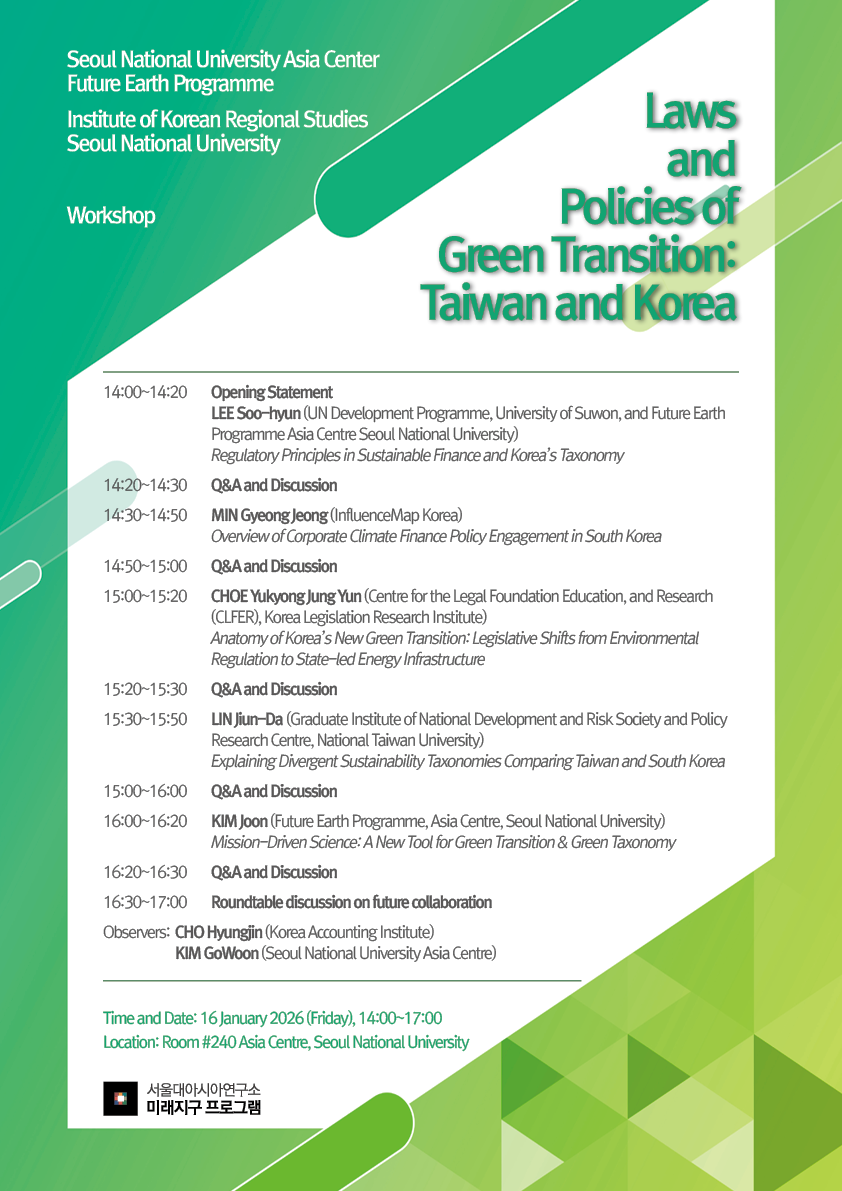
Green transition has become a public policy trend that has been widely apparent in economies around the world. Despite its public interest origins, the entry of geopolitical competition and transnational corporates rendered green transition into a complex, multifaceted issue encompassing inter alia legal systems, environmental justice, industrial policy, and climate science.
This workshop provides a forum for discussing the laws and policies of green transition and brings together experts working in complementary areas to uncover and discuss these implications to better understand this complex, cross-sectoral issue. In this roundtable, we will be exploring the taxonomies of Taiwan and Korea for comparative analysis and mutual learning.
Review
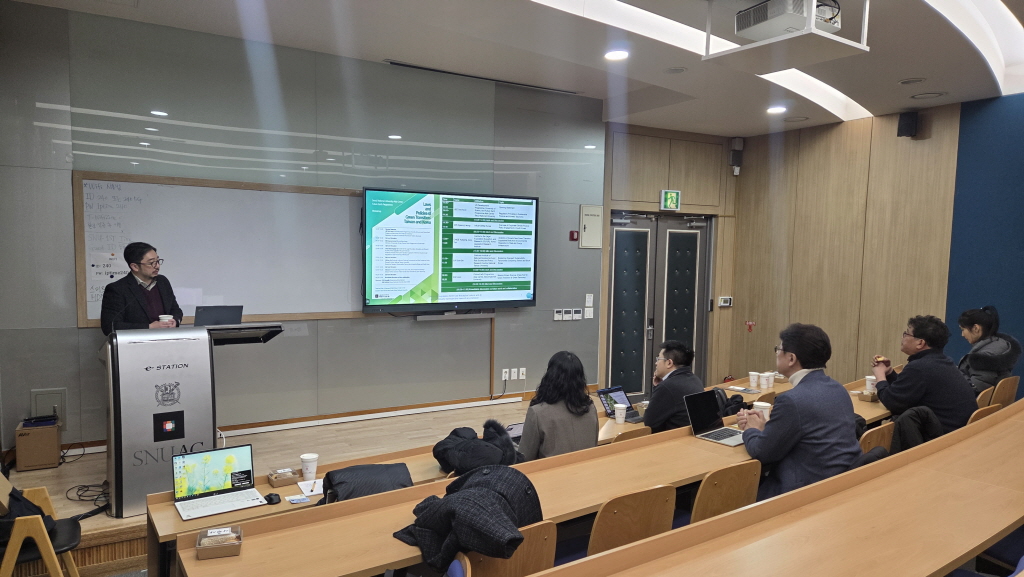
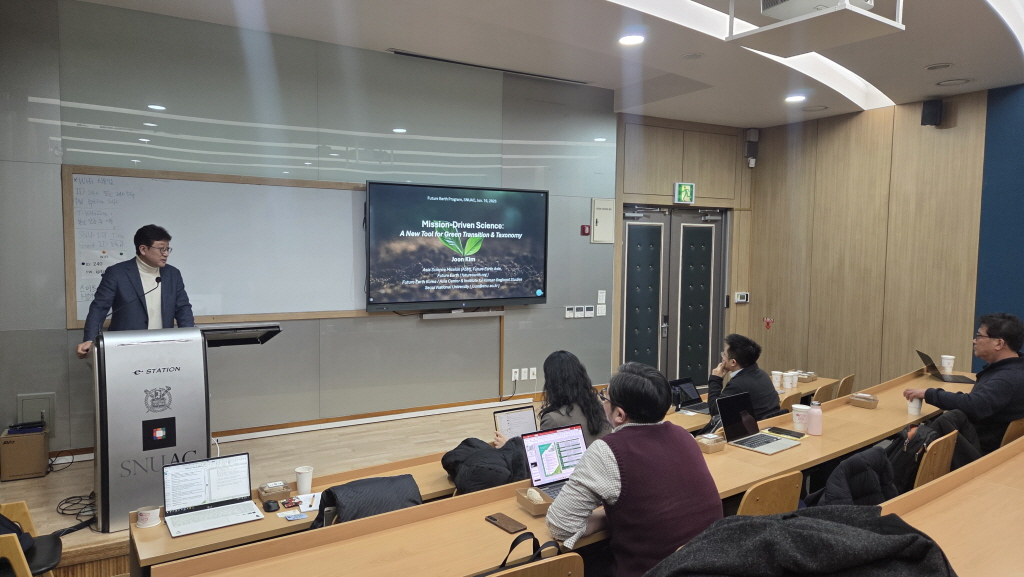
2026년 1월 16일, 아시아연구소 미래지구프로그램이 주관하여 “Laws and Policies of Green Transition: Taiwan and Korea”를 주제로 워크숍을 진행하였다. 녹색 전환을 위한 ‘Green Taxonomy’의 개념과 국제적 기준을 알아보았다. 특히 국립대만대학교의 LIN Jiun-Da 교수를 초청하여 한국과 대만의 추진현황에 대해 논의하는 시간을 가졌다.
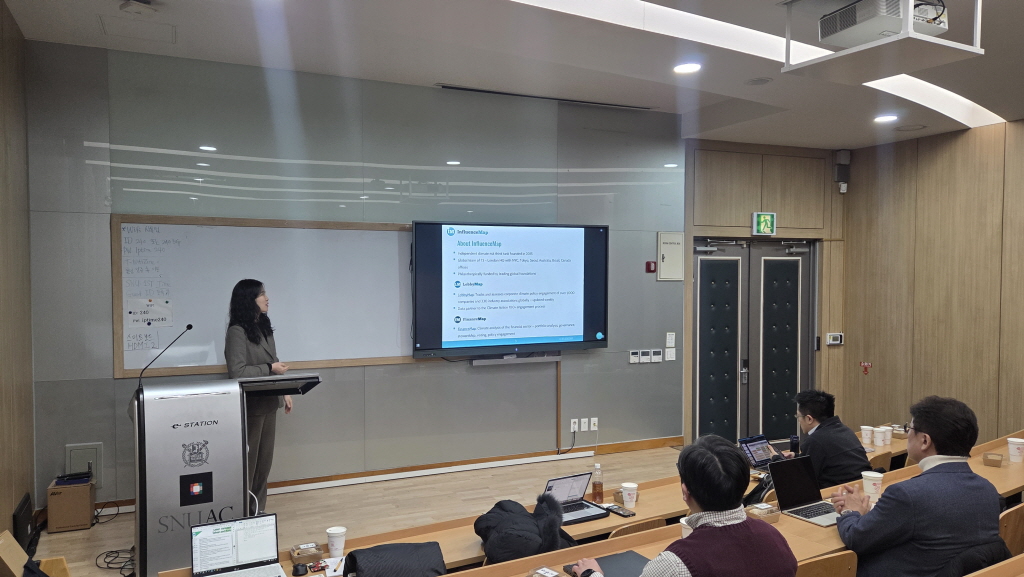
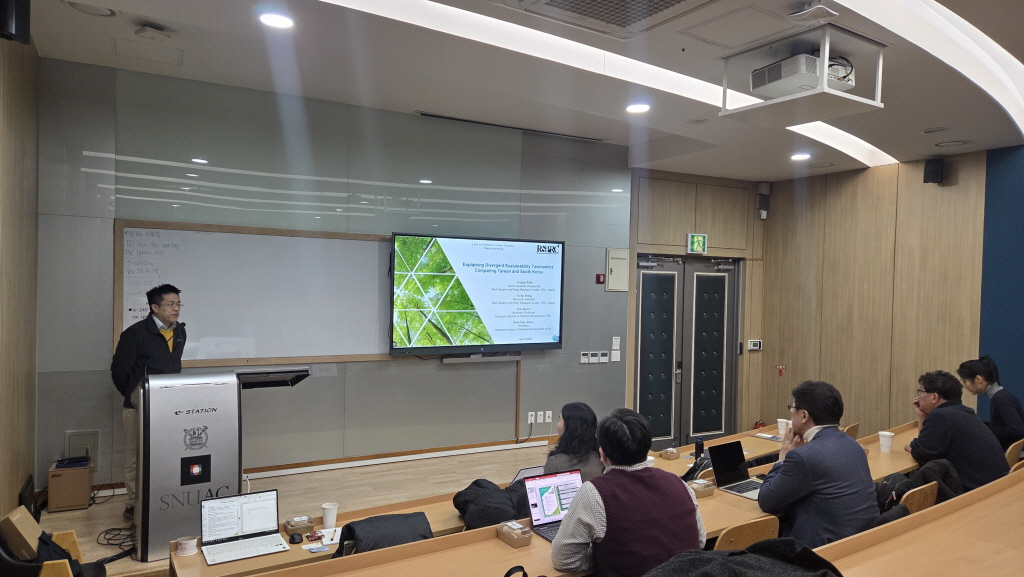
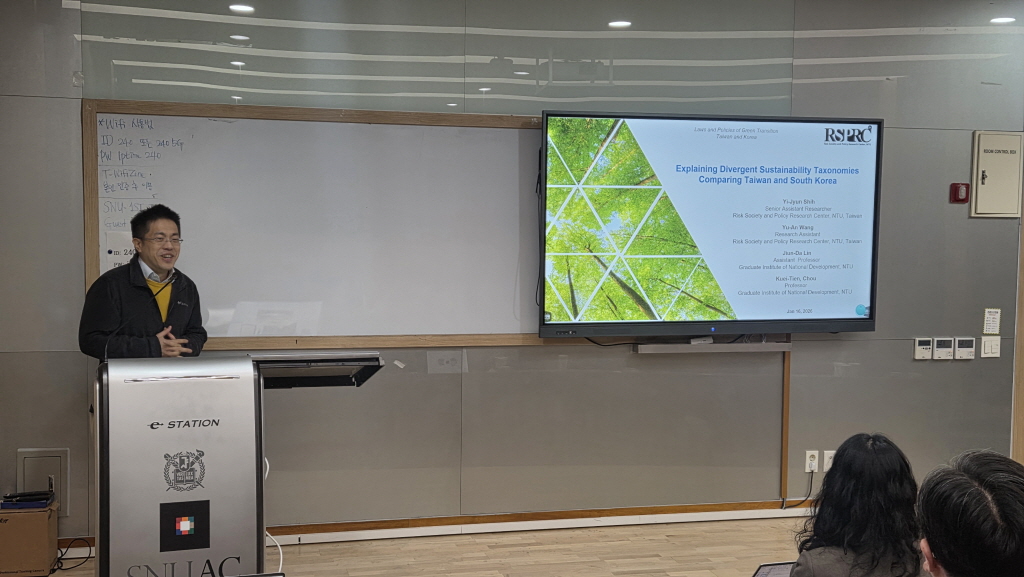
이 날 워크숍은 아시아연구소 방문학자인 수원대학교 이수현 교수의 발표로 시작되었다. ‘Regulatory Principles in Sustainable Finance and Korea’s Taxonomy’라는 제목으로, 지속가능금융의 중요성과 규제 원칙, 한국의 녹색분류체계를 설명하였다. 두 번째 발표는 InfluenceMap Korea 민경정 연구원의 ‘Corporate Climate Finance Policy Engagement in South Korea’라는 제목으로 진행되었다. 민경정 연구원은 한국 기업의 기후금융 정책 관여 활동을 소개하였다. 다음은 대만대학교 LIN Jiun-Da 교수의 발표로, ‘Explaining Divergent Sustainability Taxonomies Comparing Taiwan and South Korea’를 제목으로 하였다. LIN 교수는 대만과 한국의 녹색분류체계의 차이를 비교하여 설명하였다. 마지막으로 서울대학교 김준 교수는 ‘Mission-Driven Science: A New Tool for Green Transition & Taxonomy’를 제목으로 발표하였다. 녹색전환과 녹색분류체계를 위한 새로운 도구로서의 미션 지향 과학을 논의하였다.
이번 워크숍을 통해 녹색전환을 위한 국제사회의 노력과 발을 맞추고, 특히 글로벌 밸류체인에서의 한국 기업 활동에 제약이 없도록 한국형 녹색분류체계가 필요함을 논의하였다. EU의 녹색분류체계 가이드라인을 지속적으로 검토하고, 아시아 지역의 맞춤형 기준을 마련해야 한다는 데에 공감하였다. 한국과 대만은 아시아 국가로서 녹색전환을 추진함에 있어, 하향식 모델이 적용되며 대기업의 역할이 중요하다는 공통적인 환경 조건도 있지만, 대만의 경우 에너지 부문은 다루지 않는 등 국가 특성에 따른 차이점도 발견할 수 있었다. 한편 대만은 ‘Green Finance Action Plan’을 지속적으로 업데이트하고 있으므로 한국형 가이드라인 수립에 참고할 수 있을 것이다. 이번 워크숍으로 형성된 네트워크를 기반으로 한국과 대만의 데이터를 교류하며 지속적인 논의를 이어갈 수 있을 것으로 기대된다.