Start
2026-05-22 - 5:00 pm
End
2026-05-22 - 5:30 pm
Address
온라인 ZOOM 진행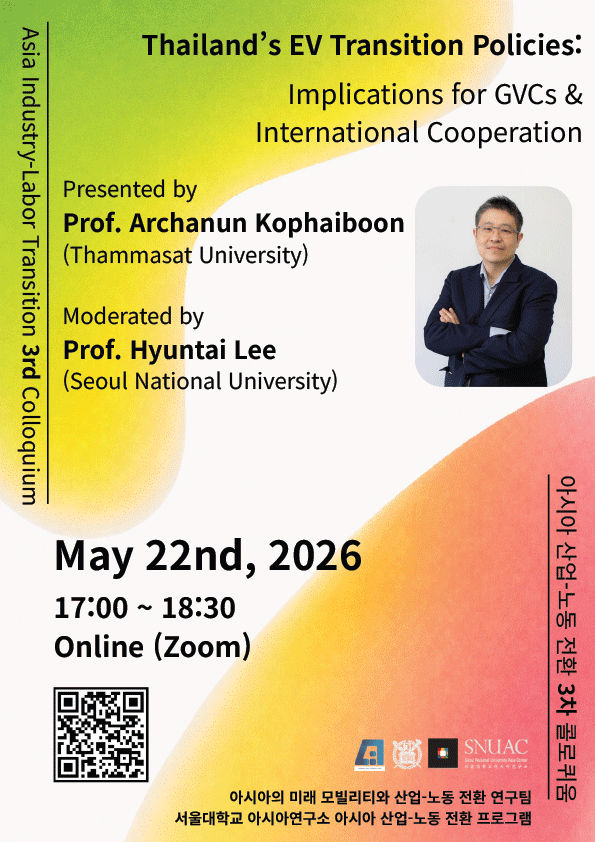
The paper analyzes the government responses to the rise of EVs in Thailand. Initially, battery electric vehicles (BEVs) were regarded as one among many environmentally friendly vehicles, with only slightly difference in incentive packages for these vehicles. From 2017 onwards, a technological leapfrogging strategy gradually gained momentum in Thailand’s automotive policy. This reached its peak in 2022, when direct subsidies for BEVs were introduced, conditional on the localization of EV battery production and domestic BEV manufacturing. As a result, the number of registered BEVs jumped tenfold within 3 years (2021-2023). This policy was implemented at the expense of existing ICEV production which is at the current core of Thai automotive manufacturing. In addition, given the inconsistency of trade liberalization on CBU vehicles, the policy measures greatly favored Chinese EVs. Since 2024, government policies have gradually rolled back to promoting environmentally friendly vehicles, with promotion measures now encompassing all types of electric vehicles — namely, battery electric vehicles (BEVs), plug-in hybrid electric vehicles (PHEVs), and hybrid electric vehicles (HEVs). It remains to be seen whether the long-term anticipated gains from developing a domestic BEV industry and its supply chain are worth the fiscal costs involved.